Technical mechanism
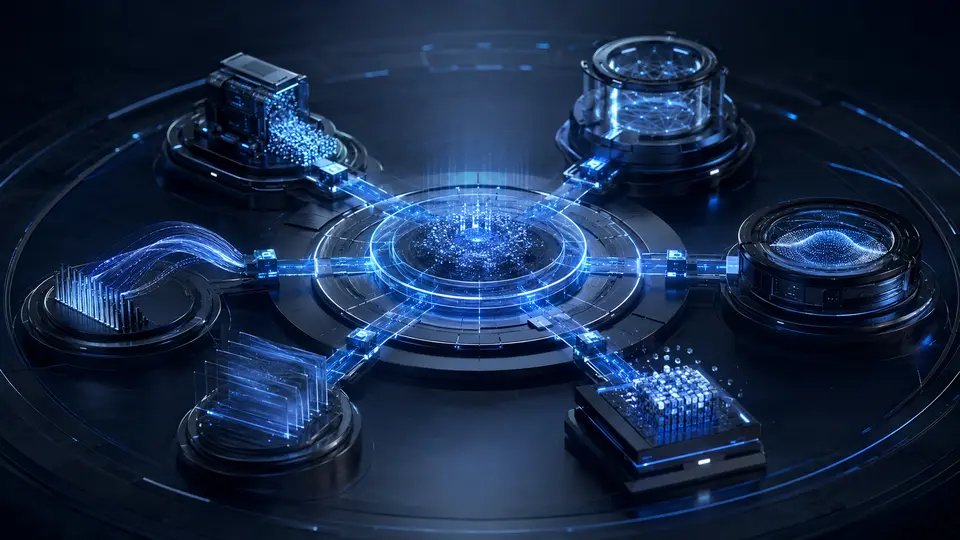
Multiple Agents divide roles and tasks, exchange structured messages, share selected state and use arbitration, consensus or verification processes to coordinate dependent work.

Technology topic profile
Definition & scope
Agent systems require more than a model. They need identity, memory, permissions, planning, observability and safe coordination with people, software and other agents.
FUURAA examines “Multi-Agent coordination” through its technical mechanism, deployment infrastructure, evidence requirements and public-interest consequences. This profile separates what can be demonstrated from what still requires field validation.
This is a technology and opportunity profile. It does not announce a current FUURAA product, ownership position, partnership, investment or transaction.
System map
Technical capability, enabling infrastructure, evidence and governance must be considered together.
Multiple Agents divide roles and tasks, exchange structured messages, share selected state and use arbitration, consensus or verification processes to coordinate dependent work.
Identity, permissions, memory, tool registries, execution sandboxes, observability and recovery mechanisms form the operating layer around the model.
Experiments should compare single- and Multi-Agent performance under the same resource budget while measuring coordination overhead, conflict detection, correctness and decision provenance.
Agents can amplify one another's errors, enter deadlocks, form misleading consensus or consume more resources than the coordination benefit justifies. System-wide governance also requires: Delegated authority needs explicit limits, approval gates, audit records, revocation and accountability for actions that cross organisational boundaries.
Application contexts
Examine how “Multi-Agent coordination” could create measurable value in “Enterprise workflows”, which supporting systems are required and where human responsibility must remain explicit.
Application contextExamine how “Multi-Agent coordination” could create measurable value in “Personal assistance”, which supporting systems are required and where human responsibility must remain explicit.
Application contextExamine how “Multi-Agent coordination” could create measurable value in “System operations”, which supporting systems are required and where human responsibility must remain explicit.
Selected evidence record
FUURAA summarises and analyses; original institutions retain ownership of their work and have not reviewed or endorsed this page.
Multi-agent coordination
FUURAA synthesisCooperBench found that paired coding agents performed worse on average than a single agent completing both tasks, exposing a coordination penalty.
Multi-agent architecture should be justified by measured division-of-labour gains, not by agent count.
Diligence questions
A credible technology profile should make it easier to identify evidence, dependencies, boundaries and unanswered questions.
What evidence would distinguish a controlled demonstration of “Multi-Agent coordination” from dependable operation?
Which technical dependency or operational bottleneck most constrains performance at scale?
Which failure or harm described in this profile should trigger suspension, escalation or human review?
Which cost, performance, safety or interoperability result would invalidate the current adoption thesis?
FUURAA outlook
Agent systems are likely to become an orchestration layer across software and physical operations, but autonomy will advance unevenly according to verification and consequence. For “Multi-Agent coordination”, credible progress should therefore be judged by verified outcomes, system resilience, responsible adoption and the ability to correct course—not by novelty alone.
This outlook is an editorial assessment, not a market forecast, investment recommendation or product timetable.What We Build