Technical mechanism
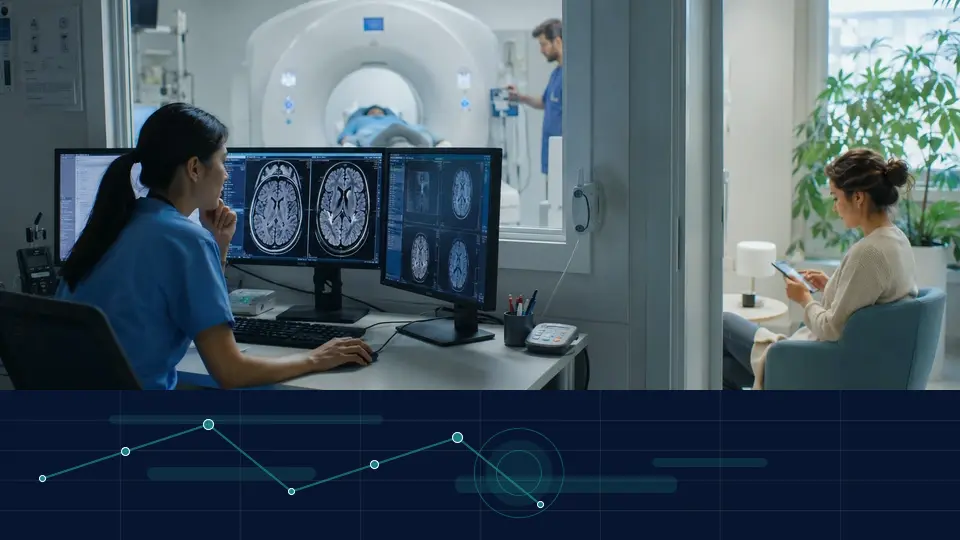
Medical vision models detect, segment, quantify or grade findings in radiology, ophthalmology and digitised tissue while supporting prioritisation and review.

Technology topic profile
Definition & scope
From biological models and discovery to clinical support, assistive technology and healthy ageing, these fields require strong evidence, privacy and continuing human responsibility.
FUURAA examines “Medical imaging and digital pathology” through its technical mechanism, deployment infrastructure, evidence requirements and public-interest consequences. This profile separates what can be demonstrated from what still requires field validation.
This is a technology and opportunity profile. It does not announce a current FUURAA product, ownership position, partnership, investment or transaction.
System map
Technical capability, enabling infrastructure, evidence and governance must be considered together.
Medical vision models detect, segment, quantify or grade findings in radiology, ophthalmology and digitised tissue while supporting prioritisation and review.
Representative data, laboratory and clinical workflows, validated devices, secure records, interoperability and trained professionals are part of the system.
Evidence should come from multi-site, multi-device reader studies reporting sensitivity, specificity, calibration, subgroup performance and impact on the clinical workflow.
Risks include shortcut learning, scanner or site drift, automation bias, missed atypical disease and exposure of identifiable image or pathology data. System-wide governance also requires: Privacy, consent, clinical responsibility, patient communication, access, bias and regulatory oversight remain central in every high-impact use.
Application contexts
Examine how “Medical imaging and digital pathology” could create measurable value in “Research laboratories”, which supporting systems are required and where human responsibility must remain explicit.
Application contextExamine how “Medical imaging and digital pathology” could create measurable value in “Clinical support”, which supporting systems are required and where human responsibility must remain explicit.
Application contextExamine how “Medical imaging and digital pathology” could create measurable value in “Independent living”, which supporting systems are required and where human responsibility must remain explicit.
Selected evidence record
FUURAA summarises and analyses; original institutions retain ownership of their work and have not reviewed or endorsed this page.
FUURAA has not attached a source that only appears related through broad AI terminology. This profile remains an editorial technology overview until a direct, attributable source is added.
Diligence questions
A credible technology profile should make it easier to identify evidence, dependencies, boundaries and unanswered questions.
What evidence would distinguish a controlled demonstration of “Medical imaging and digital pathology” from dependable operation?
Which technical dependency or operational bottleneck most constrains performance at scale?
Which failure or harm described in this profile should trigger suspension, escalation or human review?
Which cost, performance, safety or interoperability result would invalidate the current adoption thesis?
FUURAA outlook
The most credible progress will come from systems that strengthen scientific and clinical work while preserving professional responsibility and patient agency. For “Medical imaging and digital pathology”, credible progress should therefore be judged by verified outcomes, system resilience, responsible adoption and the ability to correct course—not by novelty alone.
This outlook is an editorial assessment, not a market forecast, investment recommendation or product timetable.What We Build