Technical mechanism
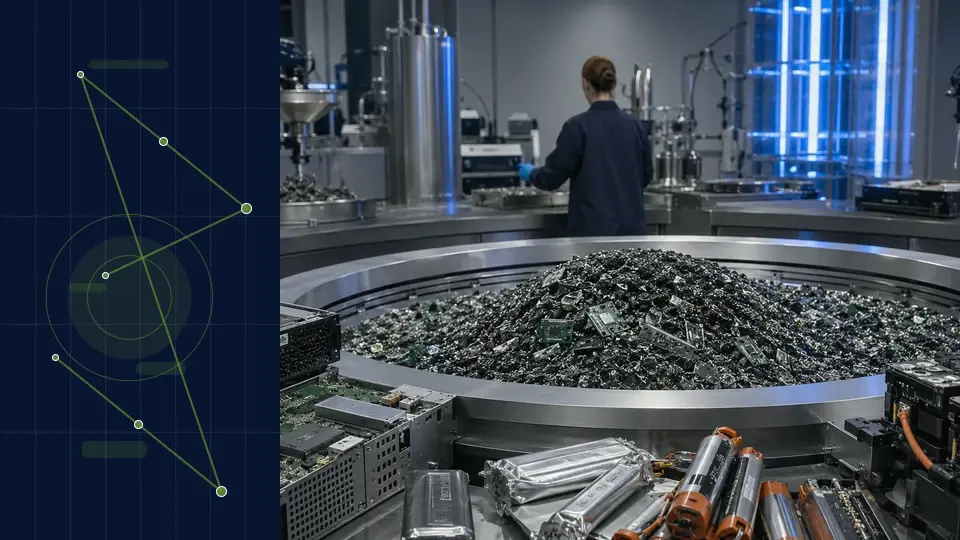
AI systems combine demand and generation forecasting, constrained grid control and battery-state or materials models to support dispatch, stability and storage management.

Technology topic profile
Definition & scope
AI is becoming a research instrument across mathematics, materials, chemistry, engineering and Earth systems. The opportunity is to improve discovery without weakening scientific verification.
FUURAA examines “Energy, grids and batteries” through its technical mechanism, deployment infrastructure, evidence requirements and public-interest consequences. This profile separates what can be demonstrated from what still requires field validation.
This is a technology and opportunity profile. It does not announce a current FUURAA product, ownership position, partnership, investment or transaction.
System map
Technical capability, enabling infrastructure, evidence and governance must be considered together.
AI systems combine demand and generation forecasting, constrained grid control and battery-state or materials models to support dispatch, stability and storage management.
Research data, instruments, domain models, high-performance compute, automated laboratories and reproducible workflows connect algorithms with evidence.
Evidence should include hardware or grid simulation and controlled pilots reporting constraint violations, stability, degradation, lifecycle performance and safe fallback.
Risks include destabilising feedback, cyberattack, correlated forecast error, battery thermal events and optimisation that shifts cost or reliability burdens unfairly. System-wide governance also requires: Research integrity, dual use, environmental consequence, open methods, data rights and equitable access shape whether acceleration becomes trusted knowledge.
Application contexts
Examine how “Energy, grids and batteries” could create measurable value in “Discovery”, which supporting systems are required and where human responsibility must remain explicit.
Application contextExamine how “Energy, grids and batteries” could create measurable value in “Engineering design”, which supporting systems are required and where human responsibility must remain explicit.
Application contextExamine how “Energy, grids and batteries” could create measurable value in “Climate resilience”, which supporting systems are required and where human responsibility must remain explicit.
Selected evidence record
FUURAA summarises and analyses; original institutions retain ownership of their work and have not reviewed or endorsed this page.
Data-centre energy
FUURAA synthesisThe IEA’s 2026 update treats electricity availability, grid timing and local concentration as central variables in AI expansion. Compute plans can no longer assume power arrives automatically.
Capacity strategy should model location, interconnection and energy delivery before hardware procurement.
Diligence questions
A credible technology profile should make it easier to identify evidence, dependencies, boundaries and unanswered questions.
What evidence would distinguish a controlled demonstration of “Energy, grids and batteries” from dependable operation?
Which technical dependency or operational bottleneck most constrains performance at scale?
Which failure or harm described in this profile should trigger suspension, escalation or human review?
Which cost, performance, safety or interoperability result would invalidate the current adoption thesis?
FUURAA outlook
AI is becoming a scientific instrument, with the strongest systems combining machine search with objective evaluators, experiments and expert interpretation. For “Energy, grids and batteries”, credible progress should therefore be judged by verified outcomes, system resilience, responsible adoption and the ability to correct course—not by novelty alone.
This outlook is an editorial assessment, not a market forecast, investment recommendation or product timetable.What We Build