Technical mechanism
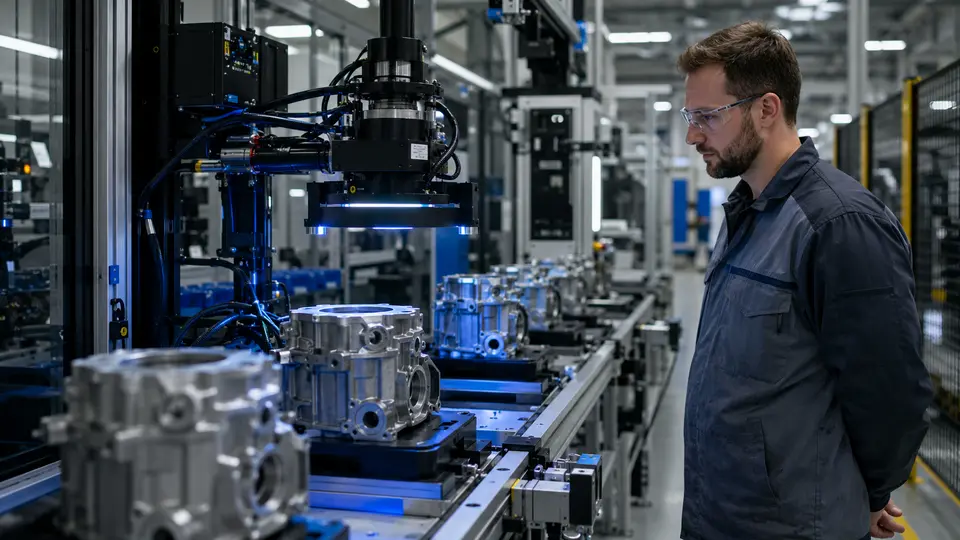
Edge vision, sensor fusion, statistical process control and digital twins can detect deviations, trace causes and support adjustments close to the production line.

Technology topic profile
Definition & scope
The next generation of work will connect software agents, people, production systems and institutional knowledge rather than simply add a chatbot to an existing process.
FUURAA examines “Manufacturing and quality intelligence” through its technical mechanism, deployment infrastructure, evidence requirements and public-interest consequences. This profile separates what can be demonstrated from what still requires field validation.
This is a technology and opportunity profile. It does not announce a current FUURAA product, ownership position, partnership, investment or transaction.
System map
Technical capability, enabling infrastructure, evidence and governance must be considered together.
Edge vision, sensor fusion, statistical process control and digital twins can detect deviations, trace causes and support adjustments close to the production line.
Process models, data access, software integration, identity, change management, workforce skills and operational monitoring determine practical value.
Operational trials should report defect recall, false-reject rates, traceability, drift behaviour, downtime impact and performance across products, shifts and sites.
Sensor drift, domain shift and unsafe closed-loop actions can convert a diagnostic error into scrap, equipment damage or worker-safety consequences. System-wide governance also requires: Worker participation, data rights, cybersecurity, procurement accountability and clear ownership of AI-assisted decisions are essential to durable adoption.
Application contexts
Examine how “Manufacturing and quality intelligence” could create measurable value in “Offices”, which supporting systems are required and where human responsibility must remain explicit.
Application contextExamine how “Manufacturing and quality intelligence” could create measurable value in “Factories”, which supporting systems are required and where human responsibility must remain explicit.
Application contextExamine how “Manufacturing and quality intelligence” could create measurable value in “Supply networks”, which supporting systems are required and where human responsibility must remain explicit.
Selected evidence record
FUURAA summarises and analyses; original institutions retain ownership of their work and have not reviewed or endorsed this page.
Industrial transformation
FUURAA synthesisThe ILO frames industrial AI as both a productivity opportunity and a transition affecting work quality, safety, skills and social protection. Technical deployment cannot be separated from labour institutions.
Factory AI programmes should carry workforce and safety plans alongside engineering plans.
Diligence questions
A credible technology profile should make it easier to identify evidence, dependencies, boundaries and unanswered questions.
What evidence would distinguish a controlled demonstration of “Manufacturing and quality intelligence” from dependable operation?
Which technical dependency or operational bottleneck most constrains performance at scale?
Which failure or harm described in this profile should trigger suspension, escalation or human review?
Which cost, performance, safety or interoperability result would invalidate the current adoption thesis?
FUURAA outlook
The next phase will move from isolated copilots toward governed operating models that coordinate people, Agents and physical systems across whole processes. For “Manufacturing and quality intelligence”, credible progress should therefore be judged by verified outcomes, system resilience, responsible adoption and the ability to correct course—not by novelty alone.
This outlook is an editorial assessment, not a market forecast, investment recommendation or product timetable.What We Build